How Can You Support Someone Who’s Been Diagnosed with Early-Stage Dementia?
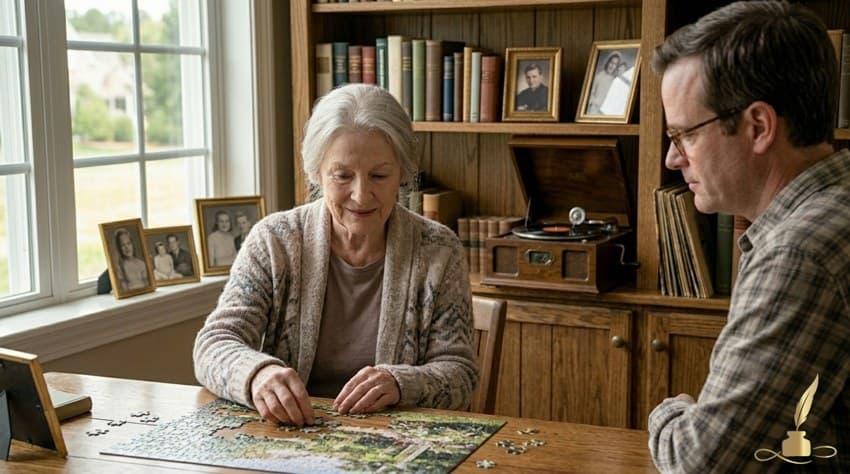
- Early-stage dementia is emotionally difficult for both the person diagnosed and their loved ones.
- Gentle, low-pressure activities can help preserve skills and create purpose.
- Hands-on tasks support motor skills and coordination.
- Memory games and simple puzzles can help support short-term memory and attention.
- Writing a biography is a powerful way to exercise long-term memory while preserving identity and family history.
Why is this so hard for everyone involved?
An early-stage dementia diagnosis is frightening for the person who receives it, but it is also deeply difficult for the people around them. One person is facing the painful reality that memory may slowly become less reliable. The other is beginning to imagine a future in which cherished stories, important facts, and even familiar faces may one day become harder to recognize.
That emotional weight changes everything. It means learning to stay patient when the same question is asked again and again. It means accepting that some memories may disappear without warning. It means trying to support someone with love, even when both of you are grieving what may eventually be lost.
What kind of support actually helps?
The best support is usually gentle, regular, and free of pressure. The goal is not to test the person, correct them constantly, or force performance. It is to help them stay active, focused, and connected to themselves in ways that feel calm and dignified.
That is why activities matter so much. The right activity can support skills, create a sense of purpose, and bring comfort to the day. Instead of long empty hours and growing frustration, it gives the mind and body something meaningful to do.
1. Support motor skills with hands-on activities
Memory is not the only thing affected by dementia. Fine motor skills, coordination, and confidence with small physical tasks can also become more fragile over time. That is why it helps to keep the hands active in ways that feel playful rather than clinical.
Simple construction games, building sets, bracelets, necklaces, sorting activities, peg boards, large-piece assembly games, and other tactile tasks can all be useful. These activities help maintain dexterity, encourage concentration, and provide a sense of accomplishment without demanding too much. They are especially helpful because they keep the person engaged with the world instead of withdrawing into passivity.
2. Support short-term memory and attention with gentle games
Short-term memory and attention often need regular exercise, but the exercise should never feel humiliating. The right games are simple enough to be enjoyable and stimulating enough to keep the brain active.
Memory card games, word games, simple puzzles, picture-matching activities, “what’s missing?” games, and category games can all help. What matters most is not difficulty, but emotional tone. If the activity creates stress or repeated failure, it stops being helpful. If it creates focus, enjoyment, and small moments of success, it becomes a real support.
3. Support long-term memory by writing their biography
One of the most powerful activities is also one of the gentlest: helping the person revisit their own life, one question at a time. Questions about childhood, early work, family traditions, love stories, homes, turning points, and important memories can encourage long-term recall in a way that feels meaningful rather than forced.
This kind of daily recollection does more than exercise memory. It helps the person reconnect with identity. Tiny details return: the smell of a kitchen, the name of a street, the face of a sibling, the joy of a specific day. Over time, those fragments can become something extraordinary — their own biography.
That is what makes this activity so valuable. It trains long-term memory in a smooth and humane way, while also creating something lasting. As the disease progresses, that biography can be read again and again, almost like someone is telling them the story they are slowly forgetting. It becomes both an exercise in the present and a gift for the future.
This is also where Legacia.bio can help in a particularly natural way. It makes the process easier, more personal, and more structured, so those fragile memories are not lost in scattered notes. They become a real story that can comfort the person later and remain with the family for generations.
What else helps create the right environment?
The three types of activities above work even better when they are part of a broader, soothing environment. Music can calm the mind, trigger memories, and create emotional connection even when words become more difficult. A pet can also bring comfort, rhythm, affection, and a sense of presence that reduces anxiety.
These are not substitutes for cognitive activities. They complement them. Together, they create a daily rhythm that supports the mind, the emotions, and the person’s sense of self.
What should loved ones remember?
You are not trying to stop the disease through willpower alone. You are trying to preserve dignity, connection, and as much joy and identity as possible for as long as possible.
That means choosing activities that support rather than frustrate, and that create meaning instead of pressure. Hands-on tasks help with motor skills. Gentle games help with short-term memory and attention. A biography helps protect long-term memory, identity, and legacy. There may be no perfect answer to dementia, but there are deeply human ways to walk through it together.