How Do I Get My Parents to Open Up About Their Life Stories?

- Asking parents about their life stories can feel awkward because the questions are personal and the answers matter.
- A neutral third party helps reduce pressure and fear of judgment.
- Guided memory work often becomes easier and more rewarding once the first questions are answered.
- Specific, open-ended questions help parents start sharing naturally.
- A digital biographer can make the process simpler, gentler, and more affordable.
Why is it so hard to ask?
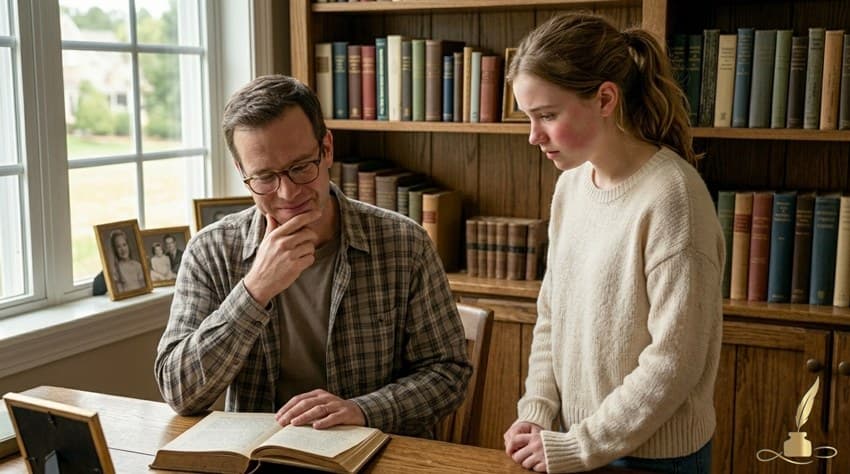
Asking parents about their life stories can feel surprisingly delicate. You may not know where to begin. You may worry about sounding intrusive, or opening a subject that feels too personal, too emotional, or simply too big. Sometimes the silence is not from lack of curiosity, but from the weight of everything you do not yet know.
There is also a quiet tension in the room when the questions become more specific. Where did they meet? What was their first love? What mistakes do they regret? What moments brought them the greatest happiness? These are ordinary questions in one sense, but they touch the deep places of a life. It is natural for both sides to feel a little exposed.
That discomfort is often the real obstacle. Not the lack of stories, but the fear of how the stories might be received.
What makes the conversation awkward?
The awkwardness usually comes from uncertainty. You are not sure what you want to know, or what you should avoid asking. Your parents may not know how much to say, how much to protect, or whether the conversation is meant to be casual, serious, or emotional. That uncertainty can make even loving families hesitate.
Sometimes the moment also carries an unspoken pressure. When children ask about the past, parents may feel they are being asked to explain themselves. They may worry about judgment, misunderstanding, or being reduced to a few dramatic chapters. Even a gentle question can feel bigger than intended.
That is why these conversations often remain postponed. Everyone wants them, but no one wants to force them.
Why does a third party help?
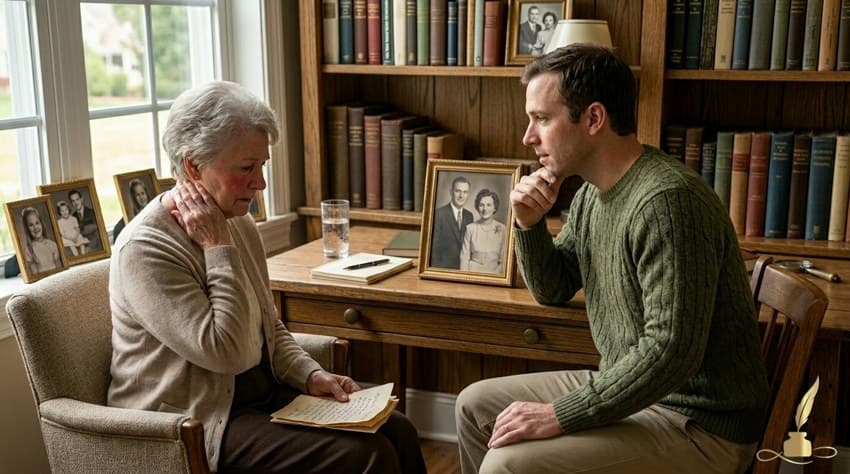
A third party can change the emotional temperature of the conversation. When a neutral guide is present, the interaction feels less like an interrogation and more like a shared reflection. There is less pressure on you to find the perfect question, and less fear for your parents that their answers will be judged.
That distance matters. It creates safety. It gives everyone room to speak more naturally, or to stop when they want. It also helps the conversation feel structured without feeling rigid.
In many families, that small layer of separation is what makes the difference between avoidance and openness.
Why does guided memory work feel therapeutic?
At first, talking about a life story can feel like effort. But very often, once the first answers are given, something shifts. The questions become easier to answer. The memories begin to come forward. People remember places, names, routines, failures, victories, and small details they had not touched in years.
That process can feel therapeutic because it gives shape to a life that has often only been carried, not fully spoken. It allows parents to see their own experiences from a distance. It can bring relief, pride, tenderness, and sometimes tears. For children, it can create a deeper understanding of the people they thought they already knew.
What begins as a difficult exercise often becomes one of the most meaningful conversations a family can have.
What should you ask first?
It helps to begin with questions that are open, specific, and easy to answer. Questions like these often work well:
- Where did you grow up?
- What was your childhood home like?
- How did you meet?
- What was your first job?
- What did you dream of when you were young?
- What made you happiest at that time?
- What was one of your biggest mistakes?
- What did love look like in your early life?
These kinds of questions are useful because they invite stories without demanding a full confession. They create room for memory to unfold naturally.
How does a digital biographer make it easier?
A digital biographer lowers the friction. It removes much of the pressure of direct conversation and replaces it with a guided, one-question-at-a-time experience. Your parents choose what they want to share, and they can answer at their own pace. That makes the experience feel more respectful and less exposed.
It also gives you a way to suggest themes without controlling the conversation. You can orient the journey around topics that matter to your family — childhood, love, work, regrets, joy, turning points — while still letting your parents decide what feels right to tell. That balance is often what makes people feel safe enough to begin.
And because the process is digital, it is usually simpler and more affordable than more traditional legacy-preservation formats. Ease matters. When something feels easy to start, it is far more likely to happen.
What changes once they start sharing?
Once parents begin speaking, the dynamic often changes quickly. The stories stop feeling abstract. The voice becomes familiar in a new way. You hear not only what happened, but how it felt. You may discover that a person you thought you knew well has lived through far more than you imagined.
That is the quiet power of memory conversations. They do not just preserve facts. They deepen relationships. They make space for empathy, gratitude, and understanding. They can even soften old tensions, because seeing a life in full often changes the way we judge the person who lived it.
What starts as a difficult question can become a form of connection.
What is the best way to begin?
The best way to begin is not with pressure, but with structure and gentleness. Choose a setting that feels calm. Start with one topic. Let your parents know they are free to answer selectively. Make it clear that the goal is not perfection, but preservation.
If that still feels difficult, a guided third-party format can help carry the weight. It removes the awkwardness from your side and the sense of scrutiny from theirs. It turns a hard conversation into a supported one.
And often, that is all it takes for the stories to begin.