How Do I Start Writing My Story, Autobiography, or Memoir?
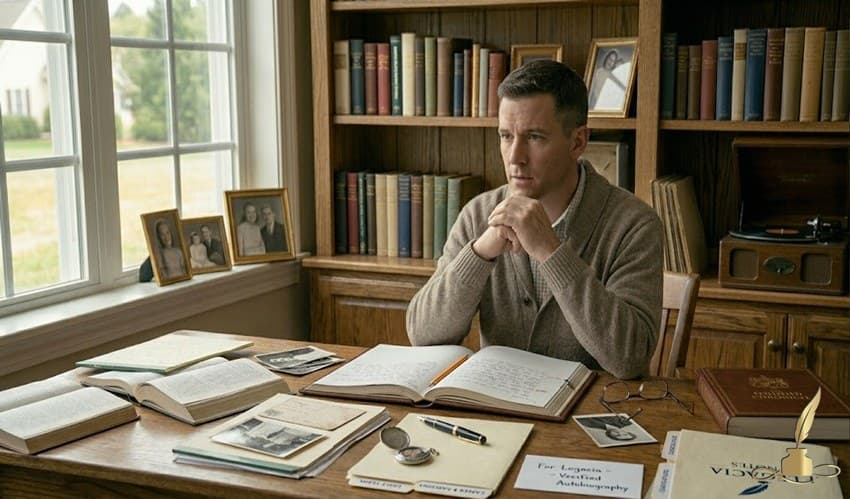
- Writing your story becomes easier when you start with one memory instead of the whole life.
- “Autobiography” usually means a full life account, while “memoir” is more selective and thematic.
- Good examples include emotion, reflection, and meaning, not just facts.
- Speaking memories first can make the final story feel more natural.
- A guided biography process can help turn scattered memories into a finished narrative.
Why is it so hard to begin?
Many people want to write their story, but they get stuck because they think they need to start at the beginning of their life and cover everything in perfect order. That expectation makes the first page feel heavier than it should.
A better way is to treat your story as something you uncover in pieces. You do not need to write your entire autobiography in one sitting. You only need to begin with one memory, one person, or one moment that still feels important.
What is the difference between a story, an autobiography, and a memoir?
“Writing my story” is the broadest phrase, and it usually means preserving a life in your own words. “Writing my autobiography” suggests a fuller account of your life from start to finish. “Writing a memoir” usually focuses on selected experiences, themes, or chapters rather than the entire timeline.
That difference matters because it shapes how you begin. If you want a full life record, your approach will be different than if you want to explore one season of life, one relationship, or one turning point.
What makes a good autobiography example?
A strong autobiography example is not just a list of dates and events. It includes the emotional meaning behind what happened, the places where life unfolded, and the people who shaped it.
The best examples feel lived-in. They tell us not only what happened, but also what changed, what mattered, and what the experience revealed about the writer.
How should I start my own story?
Start with memory, not perfection. You might begin with childhood, a defining move, a difficult loss, a career turning point, or a family tradition that still stays with you.
You can also start by answering simple prompts:
- Where did I grow up?
- Who influenced me most?
- What challenged me?
- What moment changed the direction of my life?
- What do I want future generations to understand about me?
Once you have a few memories on the page, the story often becomes easier to shape.
How do I make it feel like a real memoir?
A memoir feels real when it includes reflection, not just facts. The reader should understand how an experience felt at the time and how it looks to you now.
That is why voice matters so much. When people speak their memories aloud first, they often sound more natural and honest. The writing can then be shaped into something more polished without losing the original feeling.
Why guided storytelling helps
Most people do not struggle because they have no story. They struggle because they have too many memories and no clear system for ordering them.
A guided process can make the difference between a half-finished draft and a complete biography. It helps you move from scattered recollections to a coherent life story, and it can also reduce the pressure of trying to sound “like a writer.”
A simpler path forward
If your goal is to write your story, write your autobiography, or write a memoir, the easiest approach is to stop thinking in terms of one perfect draft. Instead, think in terms of gathering meaningful memories, one by one, and letting them become a narrative over time.
That is also why a biography-first experience can feel more natural than a blank page. Some people do not want to become authors; they simply want their story told well. In that case, a guided service like Legacia can help transform spoken memories into a polished life story that feels personal, coherent, and complete.