What Are the Top 10 Gifts for Someone with Early-Stage Alzheimer’s?
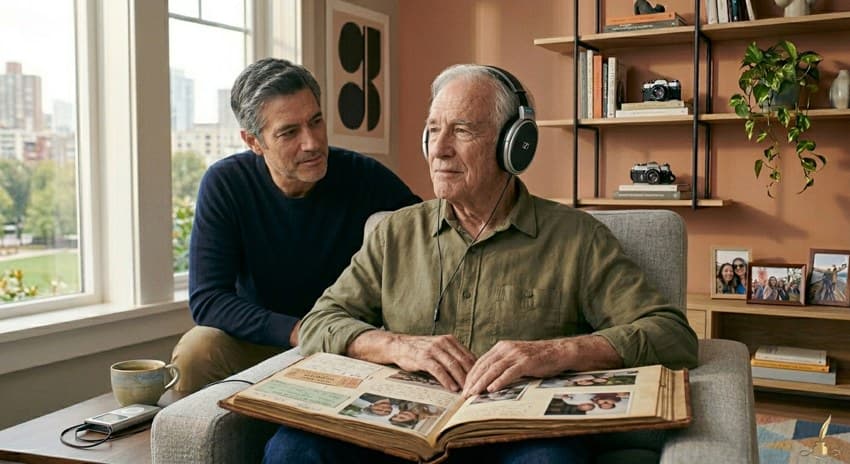
- Early-stage Alzheimer’s gifts should be personal, simple, and emotionally supportive.
- The best gifts help preserve identity, encourage memory, or reduce daily stress.
- A biography is especially meaningful because it captures the person’s story in their own words.
- Music, photos, and familiar hobbies often work well because they create comfort and recognition.
- The most thoughtful gifts are the ones that feel respectful and easy to use.
Why is it so hard to choose the right gift?
Choosing a gift for someone in the early stages of Alzheimer’s is not like choosing a gift for anyone else. You want something kind and useful, but you also want to avoid anything that feels confusing, overwhelming, or accidentally painful. A gift can be too advanced, too childish, too complicated, or simply too forgettable.
That is what makes this kind of gift so delicate. You are not only trying to give pleasure. You are trying to support a person whose relationship with memory is already changing. The best gifts in this situation are the ones that feel personal, familiar, and respectful of who they still are.
1. Their own biography
The first and perhaps most meaningful gift is their own biography. For someone in the early stages of Alzheimer’s, writing down or recording their life story can be a powerful memory exercise, but it is also something more tender than that. It is a way to gather their memories before the disease takes them further away, so they can treasure them now and revisit them later when details begin to fade.
This is not a trick, and it should never feel like homework. Done well, it is benevolent, personal, and deeply human. It gives them a chance to speak in their own words, at their own pace, without being judged or rushed. It also creates something they can reread, share, and pass on to children and grandchildren.
If you want to do this well, Legacia is a natural option. It offers a gentle, guided way to collect memories without pressure, which can make the process more comfortable, more affordable, and far more meaningful than another pair of socks or a book that may never be opened.
2. A simple music player
Music can reach places that conversation sometimes cannot. In the early stages of Alzheimer’s, familiar songs often remain emotionally powerful, and listening can spark comfort, recognition, and even moments of joy. A simple music player loaded with favorite songs is easy to use and does not demand much memory or technical skill.
The key is simplicity. Keep the controls obvious, the playlist personal, and the experience easy to return to. A person may forget what was said five minutes ago, but still know exactly how a certain song makes them feel.
3. A memory book or photo album
A memory book gives visual anchors to the past. Photos, names, dates, short captions, and familiar places can help preserve identity and invite conversation. For someone in early-stage Alzheimer’s, it can be a reassuring object to return to when a memory feels close but not fully accessible.
The best memory books are not overloaded. They are clear, warm, and specific. They should feel like an invitation to remember, not a test.
4. A puzzle or activity book
Simple puzzles, large-print crosswords, word searches, or matching games can offer mental stimulation without frustration. These gifts work well because they give the mind something to hold onto, while still feeling like an enjoyable activity rather than therapy.
Choose something that matches their abilities and interests. If they have always liked word games, keep it familiar. If they enjoy visual tasks more, look for picture-based activities instead.
5. A familiar hobby kit
A person in the early stages of Alzheimer’s often still wants to do the things they have always loved. Painting, knitting, gardening, baking, drawing, or model-building can remain meaningful for quite a while if the setup is gentle and familiar. A hobby kit can preserve a sense of competence and identity.
What matters most is not complexity, but continuity. A hobby gift says, “You are still you.”
6. A pet or companion animal
A pet can be comforting, grounding, and emotionally rich. For someone who is able to care for one safely, a real pet can bring routine, affection, and a sense of purpose. If that is too much responsibility, a realistic stuffed animal or robotic pet can still provide companionship and tactile comfort.
The goal is not novelty. It is warmth. For many people, simply having something soft, responsive, and familiar nearby can reduce loneliness.
7. A labeled calendar or reminder board
Early Alzheimer’s often makes daily organization harder, so gifts that support orientation can be very practical. A dry-erase board, wall calendar, or labeled reminder system can help the person keep track of meals, visits, appointments, and small routines. These gifts are useful because they support independence without making the person feel managed.
Choose a design that is clear and pleasant to look at. The best reminder tools are simple enough to use every day.
8. A digital photo frame
A digital photo frame can keep family present in a very gentle way. Rotating images of children, grandchildren, friends, pets, and meaningful places can bring comfort and recognition without requiring the person to handle an album or remember where everything is stored. It also allows the family to keep adding new memories over time.
This works especially well when the photos are labeled or chosen with care. Familiar faces matter most, and the frame can become a quiet presence in the home.
9. Comfortable, easy-to-wear clothing
Clothing may sound plain, but when chosen well it can be one of the most thoughtful gifts. Soft fabrics, easy closures, non-slip socks, slip-on shoes, and clothes that are simple to put on can reduce stress and preserve dignity. This kind of gift is especially useful when small daily tasks begin to take more energy.
It is a practical gift, but a deeply considerate one. It says you are thinking not only about comfort, but about ease.
10. A shared experience with no pressure
The final gift is time, but time with structure. A walk, a meal, a visit, or a quiet afternoon together can be more valuable than a physical object when it is done with patience and attention. The best experiences at this stage are the ones that do not overwhelm, do not demand too much recall, and do not create embarrassment if memory slips.
What matters is presence. A calm moment shared well can feel far more lasting than another item placed on a shelf.
Which gift matters most?
The best gift depends on the person, but the strongest choices are the ones that protect identity, reduce stress, and create connection. For someone in the early stages of Alzheimer’s, a gift should do more than occupy time. It should help them feel seen, supported, and still fully themselves.
That is why a biography can stand above the rest. It is not only a memory exercise. It is a way to keep a life story alive while it can still be told in the person’s own voice.