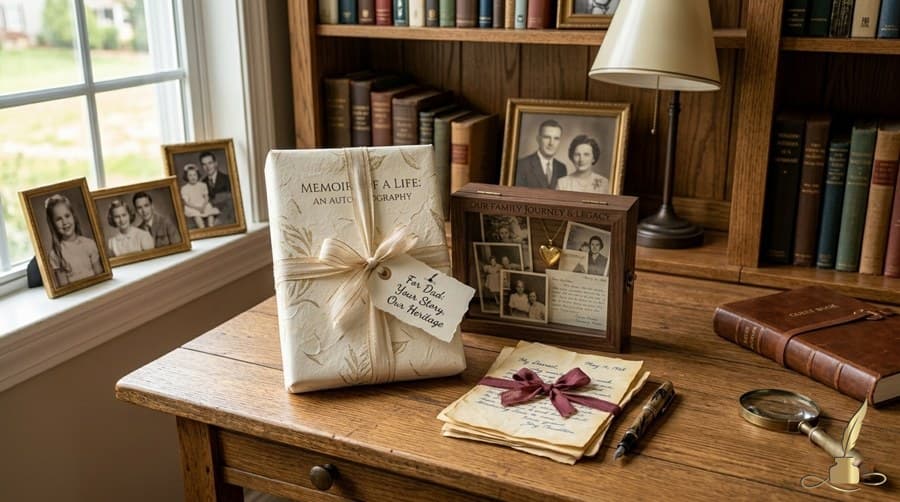
What’s a meaningful gift that isn’t another physical object?
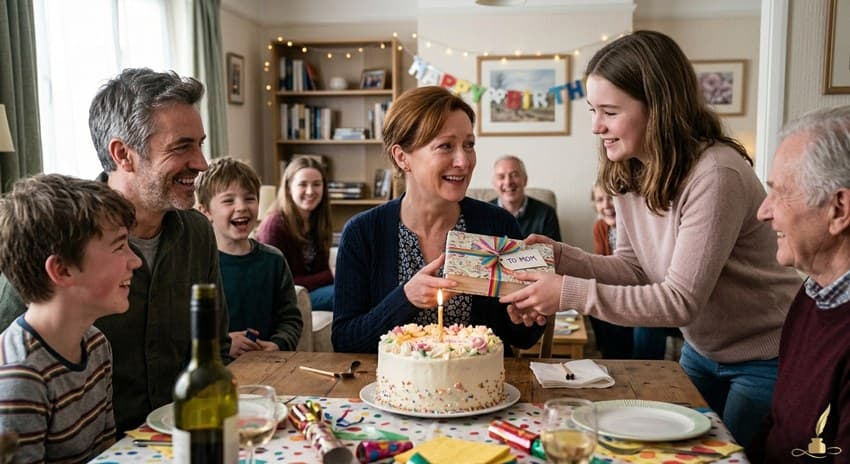
- Physical gifts are often temporary, while memory-based gifts can last for generations.
- Parents usually value meaning, recognition, and feeling understood more than more objects.
- A preserved life story is both emotional and practical.
- The best gifts often say, “I want to know you.”
- A guided storytelling experience can turn a present into a family legacy.
Why do physical gifts stop feeling special?
Physical gifts are not bad gifts. The problem is that many of them are temporary in their effect. A new piece of clothing may be appreciated, but it can be the wrong size, the wrong style, or simply not worn enough to become meaningful. A gadget may seem clever, but if it is difficult to use, it becomes one more object on a shelf. Even a beautiful holiday can lose its force once the trip is over and the photographs are all that remain.
For parents, this can become especially true over time. They already have many of the practical items they need. What they often cherish more deeply is recognition: proof that their life, their story, and their memories matter.
What do parents actually value most?
What many parents value most is not possession, but meaning. They want to feel seen. They want their experiences to be remembered. They want the ordinary and extraordinary moments of their lives to be acknowledged before they slip away.
That is why memory is such a powerful gift. It says, your life is worth keeping. It honors the years behind them, the people they loved, the places they lived, and the small details that shaped who they became. Unlike a physical object, it does not ask them to make room for something new. It gives something back.
Why do memories make such a strong gift?
Memories are fragile in a way that makes them precious. A voice you know well can become harder to recall. A face can blur. A story told many times can lose its exact wording. The older we get, the more we notice how quickly the details of a life can begin to thin.
That is what makes memory preservation so powerful. It protects what is otherwise easy to lose. It captures the sound, the setting, the feeling, and the human detail of a life before those things fade. In that sense, the gift is not only sentimental. It is deeply practical. It preserves a part of someone that cannot be replaced.
Why is this better than another object?
Because objects can be useful, but memories are personal. A sweater can keep someone warm. A memory can tell them who they are. A watch can mark time. A story can make time meaningful. A gadget may entertain for a while. A recorded life story can be revisited, shared, and passed down.
This kind of gift also works across generations. It is not only for the parent who receives it. It becomes something children and grandchildren can return to later. It becomes part of the family record. It becomes the sort of present that does not end when the wrapping paper is gone.
What makes a memory-based gift feel so different?
It feels different because it is not generic. It does not say, “I bought you something.” It says, “I want to know you.” That is a much deeper gesture. It creates space for reflection, for storytelling, and for the kind of conversation that too often gets postponed.
For many parents, especially older ones, this can feel unexpectedly moving. Being asked about their life is not the same as being asked what they want to own. It is an invitation to be known.
How can you give that gift?
The easiest way is to create a simple, guided way for parents to share their story in their own words. They do not need to perform. They do not need to write beautifully. They only need a place where they can speak, answer one question at a time, and choose what they want to reveal.
That makes the experience easier, more comfortable, and more meaningful. It reduces the awkwardness of direct questioning and gives parents the freedom to open up at their own pace. What begins as a thoughtful gift can become a lasting family keepsake.
What should you remember when choosing a gift?
If you are looking for something better than another object, think beyond usefulness and novelty. Think about what will still matter years from now. Think about what your parents will reread, revisit, or listen to with emotion. Think about what your children might one day want to know.
The most memorable gift is often the one that helps someone feel that their life is worth preserving.