What Questions Should I Ask My Parents Before I Lose the Chance?
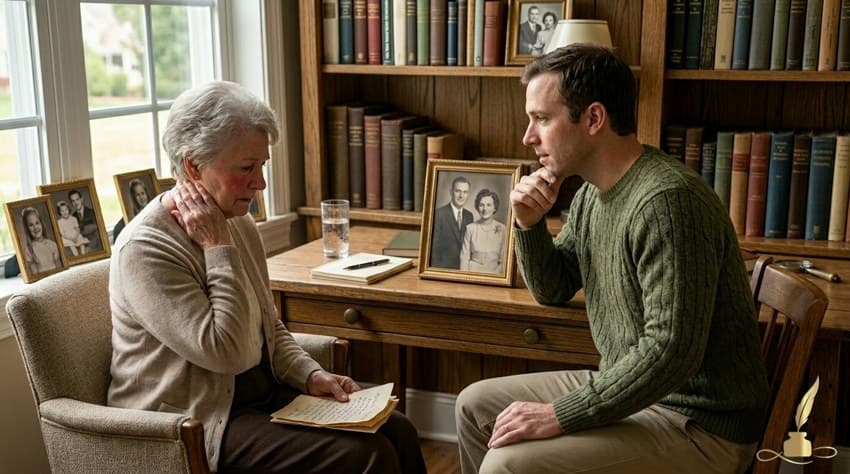
- The best questions are open, personal, and easy to answer.
- It is normal for family conversations to feel awkward without guidance.
- Legacia.bio helps remove pressure by asking the right follow-up questions.
- The process becomes more comfortable when someone else helps shape the conversation.
- Captured memories become more valuable when they are turned into a real biography.
Why does this matter now?
There is a moment in life when you realize your parents are not just your parents. They are people who lived full lives before you, and those lives contain stories you may never hear unless you ask for them now.
The difficulty is that time does not pause for curiosity. Details fade, memories slip, and the chance to ask a question can pass quietly if you keep waiting for the perfect moment. That is why the right questions matter so much: they open the door before it closes.
Why is it hard to ask?
Asking parents about their past can feel awkward because the questions are personal and the answers may be emotional. You may worry about sounding intrusive, or about asking something they do not want to revisit.
There is also the pressure of not knowing what to ask next. A conversation can stall easily when you are trying to be respectful, helpful, and thoughtful all at once. That is often where people stop, even when they genuinely want to know more.
What should you ask first?
The best first questions are open, specific, and easy to answer. They should invite a story rather than demand a perfect memory.
Start with questions like these:
- Where did you grow up?
- What was your childhood home like?
- What did your parents teach you that you still carry today?
- How did you meet?
- What was your first job?
- What did you dream of when you were young?
- What was one of the happiest times in your life?
- What is a memory from your childhood that still feels vivid?
- What was your first love like?
- What is a mistake that taught you something important?
These questions work because they are simple, but they often lead to deeper stories than you expect.
What kinds of stories matter most?
The most meaningful stories are usually not the most dramatic ones. They are often the small, human details that explain a life: the house they grew up in, the smell of a kitchen, the person they loved, the job they took, the decision they regretted, the joy they never forgot.
Those details help you understand not just what happened, but who your parents became because of it. A good question can turn a vague family history into something vivid and real.
How do you keep the conversation going?
Once one answer leads to another, follow the thread. If your mother mentions a school, ask what it looked like. If your father mentions a friend, ask what made that friendship important. If they talk about a move, ask what they remember most about leaving.
That is where many families struggle on their own. It is not always easy to know which follow-up question will open the door further, or how to move from a simple answer to a deeper story without making the exchange feel forced.
Why is guidance helpful?
This is where Legacia.bio makes a real difference. It takes away much of the awkwardness by doing the hard part for you: it asks the right questions, follows the right threads, and creates a setting that feels easier for both you and your parent.
Instead of feeling like an interview you have to manage yourself, the process becomes more natural and less stressful. Your parent does not need to wonder whether they are saying the right thing, and you do not need to worry about finding the perfect question every time. The result is a conversation that can go deeper without feeling pressured.
What happens to those memories?
The most precious part of the exchange should not disappear after the conversation ends. It should become something lasting.
Legacia.bio turns those fragile, personal details into a valuable story. It preserves the small moments, the emotional turns, and the memories that would otherwise remain scattered. What begins as a difficult conversation becomes a carefully shaped biography that your family can return to, share, and keep.
What should you remember?
If you are wondering what to ask, the answer is simple: ask about the places, people, moments, and feelings that shaped the life behind the parent you know today.
And if you want the process to feel easier, more comfortable, and more meaningful, let Legacia.bio help carry the weight. It is built to take the awkwardness away, ask the right questions, go deeper where it matters, and turn what you uncover into a story worth preserving.